Published 1 May 2026
Ninety-Five Per Cent
It’s Wednesday in Petone. Five people sit around a table. Coffee cups cool between sentences. Someone starts a story. Someone else finishes it.
The five range in age from 52 to 73. A retired GP. A former nurse. An IT specialist. A professional poker player. A teacher.
All five live with young onset dementia.
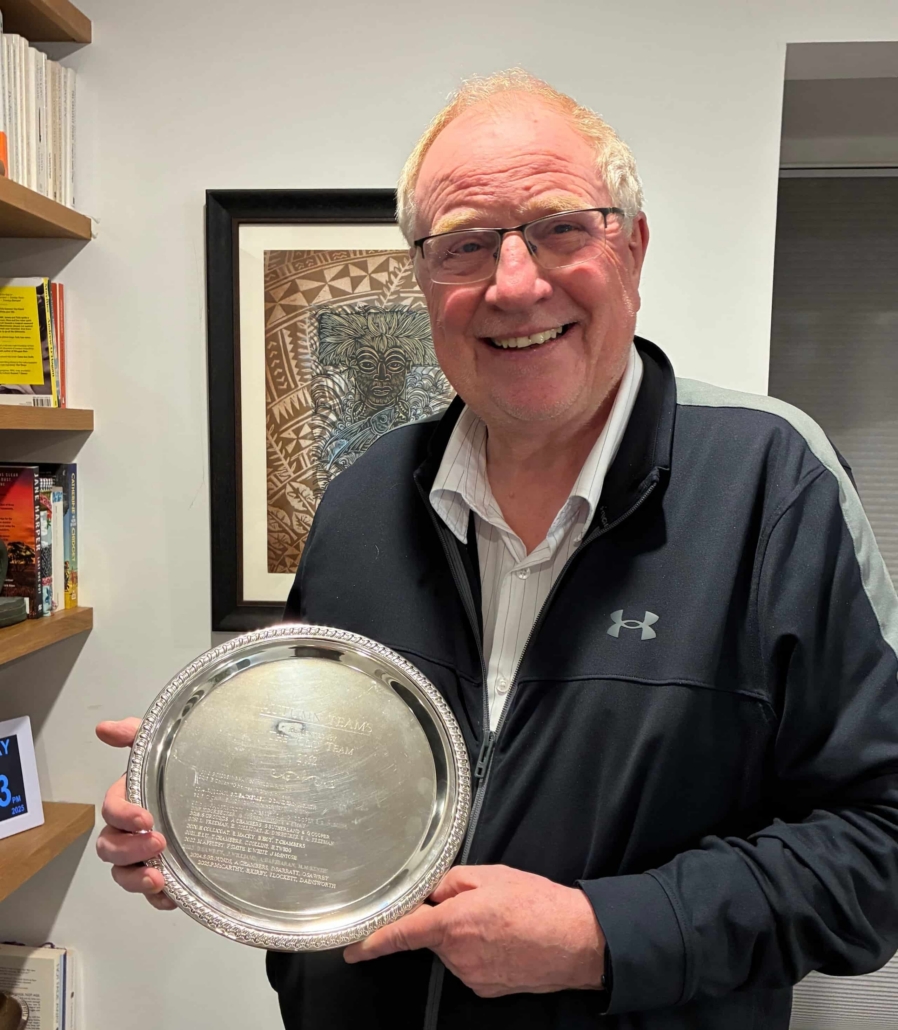
Above:
Pat with his Autumn team trophy
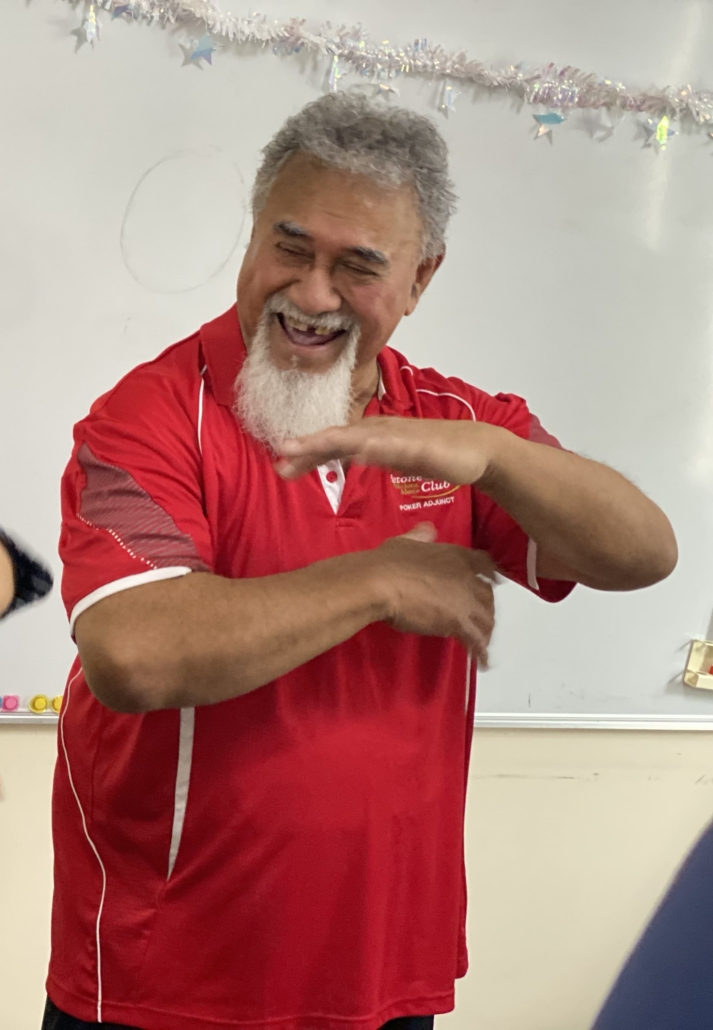
Above:
Jack always has a smile on his face
“People assume that when you’ve got dementia, you lose your intelligence,” GP Pat says. “They think you’re stupid.”
He says it plainly. No self-pity. Just fact.
Three years ago, Pat noticed something was off during a game of Scrabble. Three spelling mistakes in one sitting. That had never happened before. Within days, he had organised his own neuropsychological testing.
He still plays bridge twice a week. Holds a trophy. Volunteers at the hospital. Walks two kilometres a day. He is the honorary president of the British Society of Clinical Hypnosis and will deliver a lecture in Scotland later this year.
“Oh, I was the Toastmasters champion of Wellington,” Pat says, almost as an afterthought.
Then he shrugs.
“I only spend about five per cent of my week thinking about dementia,” he says. “The other ninety-five per cent is the rest of my life.
Across the table, Jack leans back in his chair.
“People still come and ask me questions,” he says. For years, he was known as the ‘Godfather’ of New Zealand poker.
Younger players still seek him out. “They think they can beat me, me.” Then he adds with a grin, “they can’t.”
He has been a member of the same gym for 20 years. His grandchildren keep him anchored.
“I’ve got many things that motivate me,” he says. “Number one is my darling greatgranddaughter.”
Leanne laughs at something Jack says, then shakes her head.
“There’s no such word as can’t,” she says.
She was a nurse and educator. At 59, she lives in a rest home. Some days she feels confined. Other days, she ‘escapes’ with an activities officer, heads to the library, then to a museum café for coffee and cake. She has taken up watercolour painting and is learning chess.
“Sometimes my words don’t come,” she says. “Sometimes I forget what someone’s told me. But that doesn’t mean I’m stupid.”
Linda bowls. She swims. She goes to the cinema even if she forgets the plot before she reaches the car park.’
“Hey,” she says with a shrug, “it’s an outing.”
Recently she bought a book at a sale and read it in one night. She is reorganising her art supplies so she can see them. If they are out of sight, they disappear from her mind.
Fin is the youngest at 52.
Five months ago, he was working as an IT specialist. His days had shape. Meetings. Systems to fix. Problems to solve. Colleagues who relied on him.
At home, he and his wife were building a house while supporting two daughters through study. Two incomes. Church on Sundays. A calendar that filled itself.
Now, some mornings he stands in the kitchen and waits.
“What am I doing today?” he asks.
Work had given his days shape. Without it, the hours stretch.
“One day he was working,” Fin’s wife explains. “Almost the very next day, he wasn’t.” The house build stopped.
They secured a mortgage on an existing property while employment negotiations were still unfolding. Decisions that once felt steady suddenly felt urgent. As a migrant family without extended whānau nearby, they are navigating this largely on their own.
They stopped going to church. The noise and conversations became too hard to manage. People began to wonder where they had gone.
For months, no one mentioned young onset support groups. No one suggested there were others in the same position.
Here, around this table, no one has to explain the pauses. They forget things. Words. Plotlines. Appointments.
None of them have forgotten competition. Or curiosity. Or how to argue. Or how to laugh at themselves.
Jack finishes his coffee and pushes the cup aside.
“They think dementia is the end,” he says. “It’s not.”
No one contradicts him.
The conversation moves on.