Listen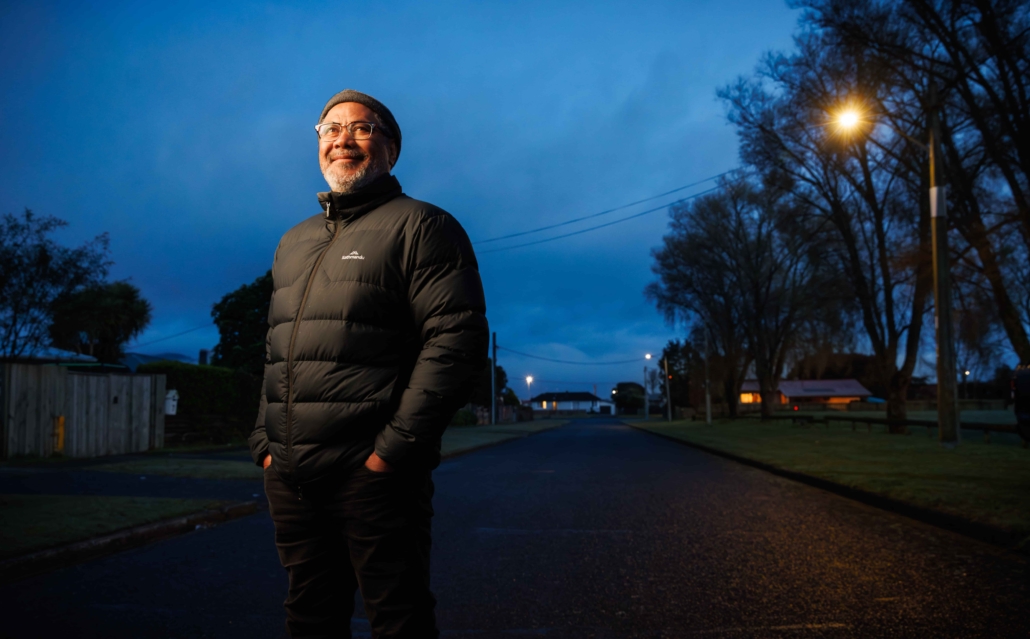
I Am Still Here – Bringing Community Stories to the Stage
Image credit: Stephen Parker/Rotorua Trust
For Rotorua writer and director Jack Grace, the stage is more than a place for performance – it’s a platform for telling the real stories at the heart of his community.
In his recent project, I Am Still Here, Jack explored the lived experiences of people with dementia | mate wareware, their whānau, and care partners.
Jack began with a clear direction in mind, but as he met with whānau and listened to their stories, the work took on a life of its own. The kōrero shaped not just the characters but the heart of the piece, steering it in a direction he hadn’t first anticipated.
“I’ve been in performance my whole life – it’s where I feel I belong,” Jack says. “But this work within our community is different. It’s about listening first, then telling stories in a way that’s true to the people who live them.”
Jack’s work draws its strength from hauora (health and wellbeing). He believes that pūrākau (storytelling) has the power to connect people, spark conversation, and shift understanding – particularly when it addresses hauora challenges that are often difficult to talk about.
“If I had a kīwaha [catch phrase], it would be that I’m most creative in my own silence,” he says. “Periods of solitude give me the space to reflect on what I’ve been told and to find the heart of a story.”
Real stories, not something ‘bright and shiny’
Jack resists the temptation to make theatre only about uplifting narratives. Instead, he seeks the humanity in complex situations.
In both I Am Still Here and a previous project (The Puriri Tree), the characters emerged from kōrero (conversations) with people who generously shared their experiences, shaping the script in their own voices.
The results of these performances have been deeply moving – and, for many in the audience, personal. After one performance, more than 200 people stayed for a Q&A.
“It’s humbling, creating a safe space for people to have their view, without bias and without prejudice – enabling them to speak their frustrations, their reality.”
For Jack, telling these stories isn’t about speaking for others but creating the conditions for them to speak for themselves.
“Theatre is a wonderful space, it provides a vehicle to be able to say what needs to be said. And to witness people being able to share in the space, to tell their stories in a way that’s unfiltered – it’s magic.”
Partnership with Dementia New Zealand
Jack acknowledges the role of collaboration in bringing I Am Still Here to life, including support from Dementia Lakes and the wider Dementia New Zealand network.
“Organisations like Dementia New Zealand are doing important work in our community, and it was a privilege to work alongside them,” he says.
Cathy Cooney, Dementia New Zealand Chief Executive, describes the project as “a creative doorway into a conversation our communities need to have.”
“The play was beautifully written, and the discussions afterwards offered a meaningful space to reflect on some of the realities of life with dementia,” said Cathy. “It was a reminder of how important it is to create space for shared experiences and honest kōrero in our communities.”
Continuing the conversation
For Jack, the value of I Am Still Here isn’t measured in ticket sales, but in what happens after the audience leaves. It’s in the quiet conversations on the car ride home, the messages shared between friends, and the courage it gives someone to open up about their own experience.
“Storytelling can change the way we see each other,” he says. “If someone leaves feeling less alone, or more understood, then we’ve done our job.”
The title – I Am Still Here – came to reflect what Jack heard in so many of the stories. It speaks to identity, spirit, and relationships that endure beyond a diagnosis. And for Jack, it’s also a message to the wider community: to keep seeing, hearing, and valuing people with dementia.
I Am Still Here also grew into a four-part podcast series, giving voice to experts, people living with dementia, and whānau – stories told kanohi ki te kanohi (face-to-face) and straight from the source.
You can listen to the series on YouTube.