Published 2 May 2026
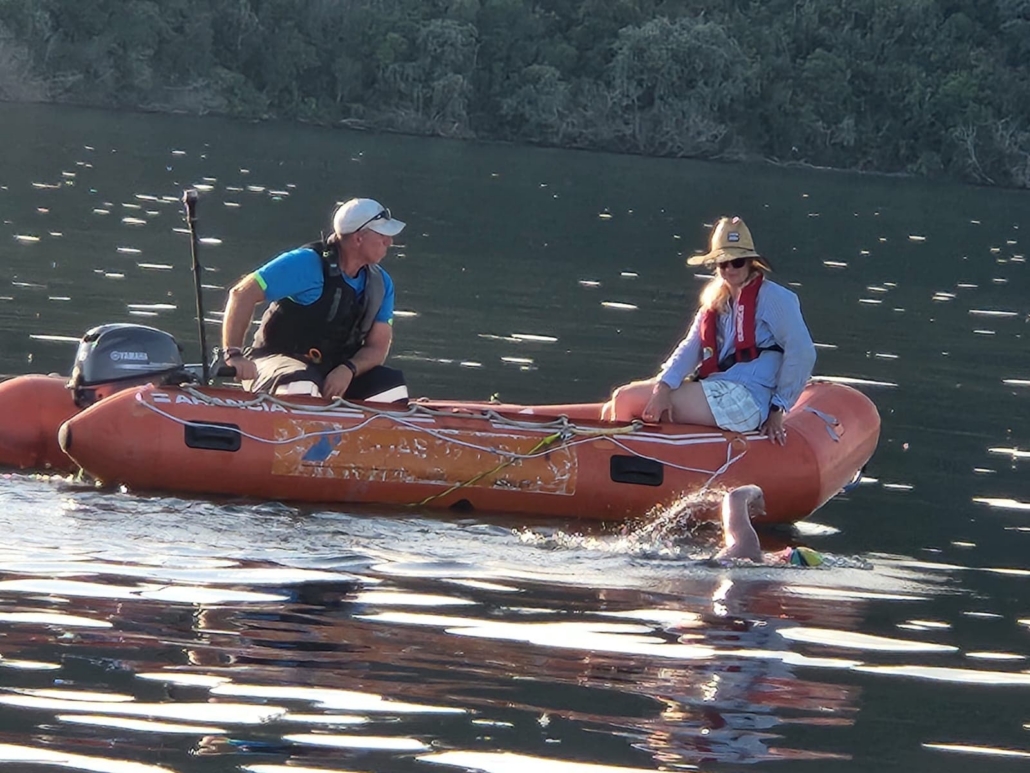
Danielle Falconer – after the swim
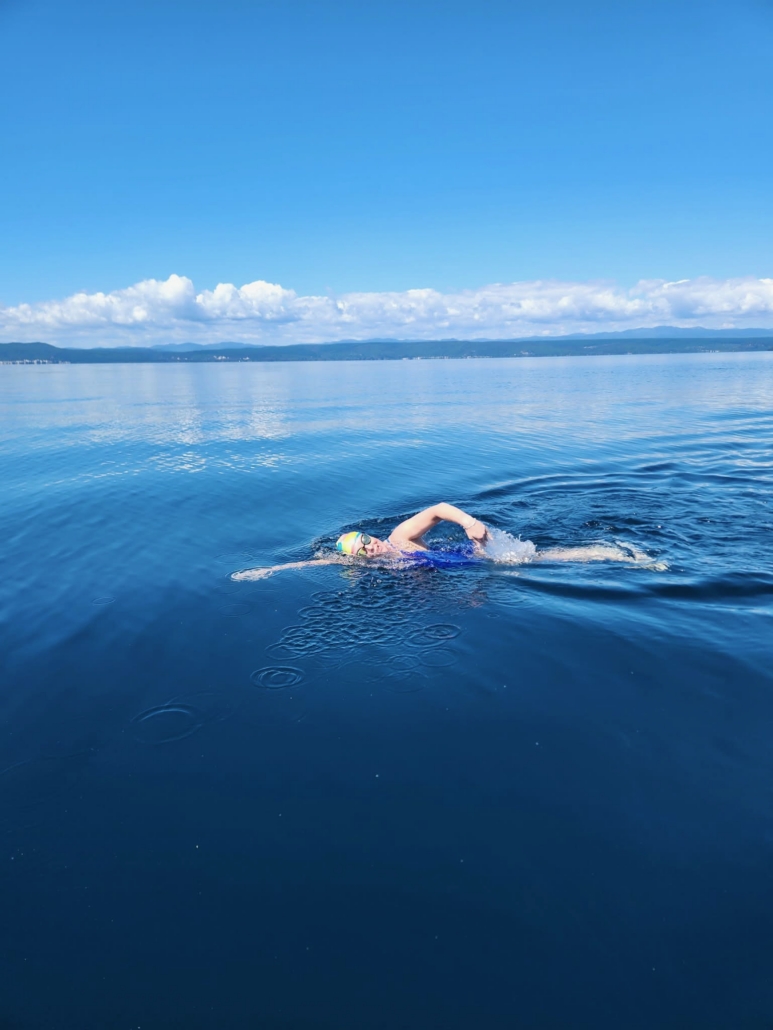
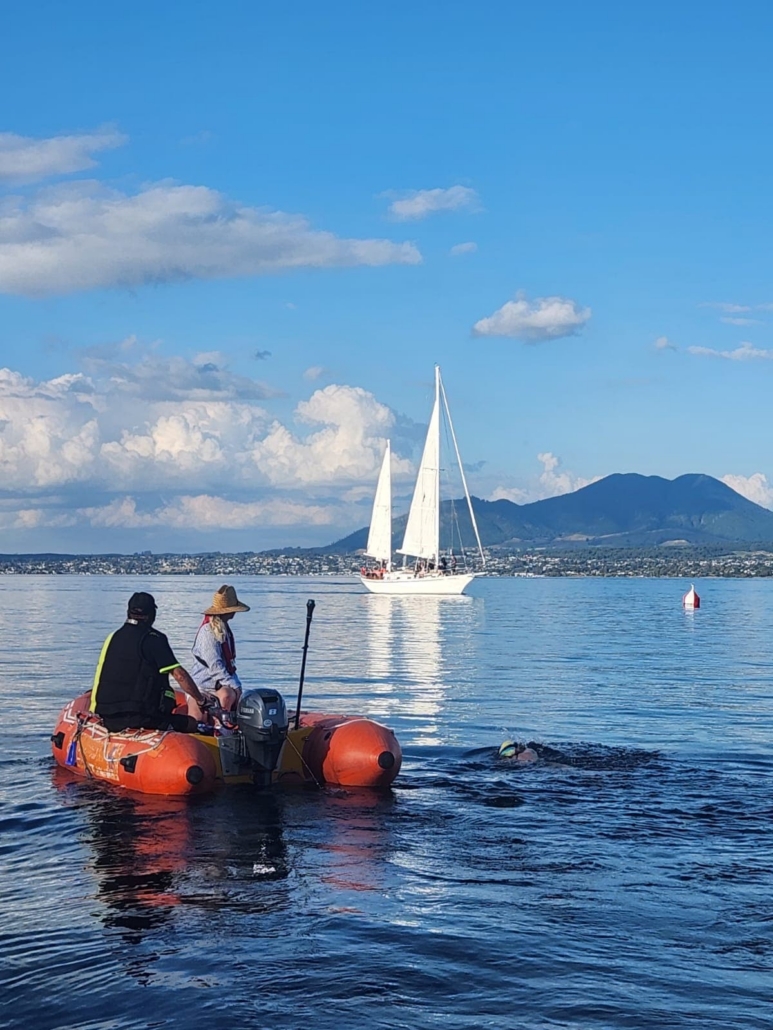
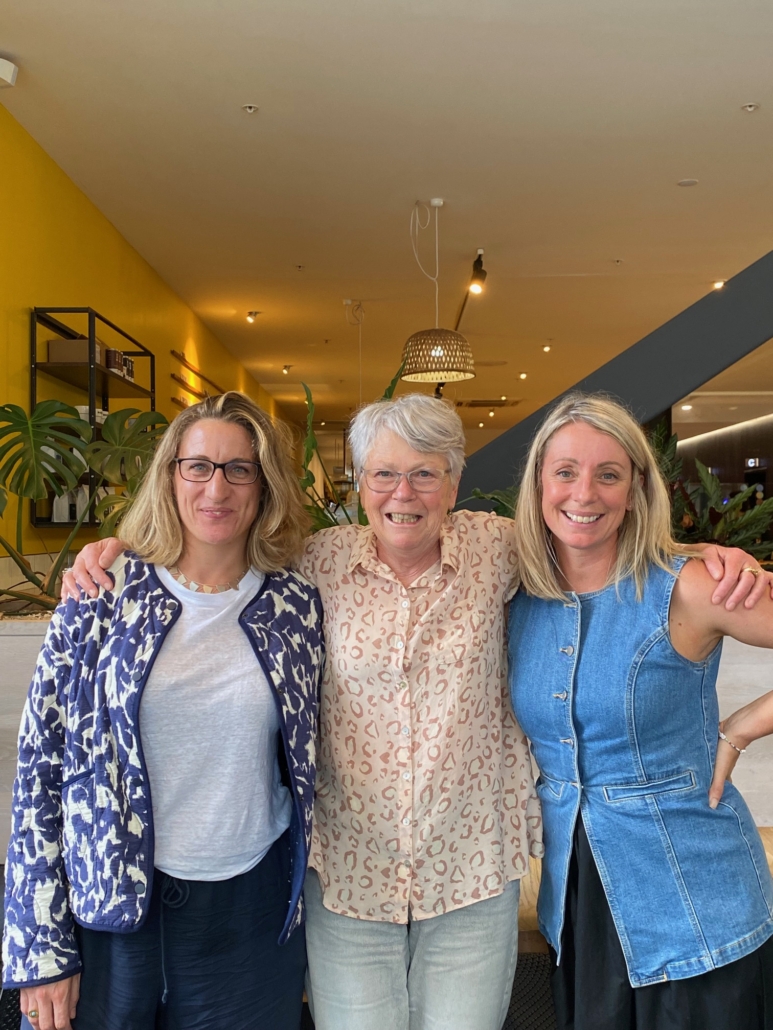
By the time Danielle Falconer reached the far side of Lake Taupō, she had been in the water for 16.5 hours.
She had started at 4:30am, before first light, and swum the full 40.2 kilometres without stopping.
By the end of the day, she, her longtime family friend, Lorna, and their community of friends and colleagues had raised over $15,000 for Dementia New Zealand. In the days following the swim, that amount grew to an incredible $16,500
But none of that explains why she chose to do it.
It started with Dave
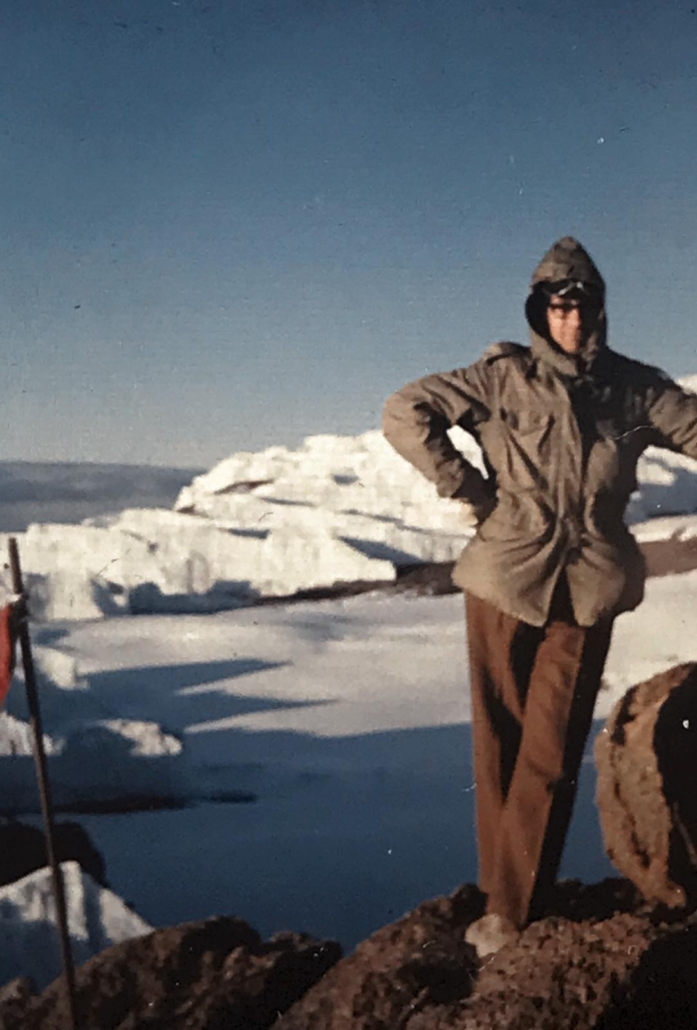
In early 2025, Danielle stood with friends and whānau at the funeral of close family friend Dave. At one point, a grainy photo was shown of him standing proudly on the summit of Mount Kilimanjaro, upright, smiling, completely himself, conquering a lifelong ambition
It’s the image his daughter Lorna returns to.
“That’s how we hold onto him,” she says. “Not just for what dementia took, but for everything he was before that.”
Dave had been supported by the Dementia New Zealand network as his condition progressed. Lorna had seen what that support meant in real time, not just information, but someone to help make sense of what was happening and what to do next.
She was also the one coordinating the fundraising for Danielle’s swim, following it closely from the shore as it unfolded. For Danielle, the moment at the funeral settled something that had been sitting in the background for a while.
“When Dave passed… that was kind of the crystallisation,” she says.
The swim stopped being a question of distance alone. It became something she was doing for Dave, for Lorna and for families like theirs.
A long way to go
At 4:30am on Saturday, 21 March 2026, with only the moon and the lights of the two support boats showing the way, Danielle entered the lake and began swimming.
The plan was to break the distance down and stay steady. But fate had other plans. About 13 kilometres in, her shoulder gave way.
“I tweaked it, and the pain just shot through me…”
From that point on, the swim didn’t open up in the way she expected. There was no point where things settled. Instead, it became something she had to work through, one moment at a time.
“It was very much a mental grind for a very, very, very, very long time.”
Because of the injury, even her field of vision narrowed. She couldn’t breathe to both sides like normal. She was either looking down at the water in front of her or across to the support boat beside her. Hours passed like that.
Staying with it
She had prepared for the possibility that it wouldn’t go to plan. Not just physically, but mentally, knowing that if things went awry, she would need to stay with what was in front of her.
Sometimes that meant focusing on the next feed stop. Sometimes it meant simply not thinking beyond the next stretch. The reason for the swim stayed close in her mind.
“My hardship ends when I choose. For many people connected to dementia, that choice doesn’t exist. Knowing that others in our community identified with that purpose and were likely watching on the live tracker was very motivating. It helped keep me moving.”
At the same time, Lorna was feeding updates through to the crew from land, the fundraising total climbing steadily as people donated and followed along. At each stop, Danielle was told the number had gone up.
“I remember thinking, just swim a bit more… because every time you swim… someone donates.”
The point where it nearly stopped
For most of the crossing, she held that line. Until, near the end, she was both physically and mentally exhausted. With around three kilometres to go, and with the prospect of swimming back into darkness after hours and hours in the water, she felt herself start to slip.
“It felt like I’d just been carrying this emotional and mental load alone for so long, and I just needed someone else to go… actually, you can, you’re really close, and you can.”
Her support crew stepped in.
“They were amazing. Each person contributed to reinforce their belief in me that I could carry on. They all had a role to play in getting me across – they made it possible for me to keep going.
“As I got closer to the shore, a wonderful group of supporters and strangers on shore were honking horns, flashing car lights and whooping in welcome. It was a wonderful way to be welcomed in,” smiles Danielle.
Beyond the finish
In the days following the swim, $16,500 had been raised, a result of many months of effort, and a community that followed the swim as it unfolded.
For Frances Blyth, Chair of Dementia New Zealand, the significance goes beyond the distance.
“What Danielle and Lorna have done is quite something,” she says. “To take on a challenge of that scale is one thing. To do it in a way that brings people with you – that opens up conversations about dementia, about brain health, and about what families are navigating – is something else again.
“This hasn’t just been about one swim. It’s helped make something that can feel difficult to talk about more visible, more understood, and easier to engage with.
“And that’s how change happens – not all at once, but through people who are willing to step forward, share their experience, and bring others with them. We’re incredibly grateful to both these women – Danielle is an inspiration to us all.”
Not done alone
In the days since the swim, people have asked Danielle how it felt. The question assumes a certain kind of answer: pride, relief, a sense that everything came together in the end.
That’s not how she describes it.
“Do I feel proud of how I swam, physically? Not so much, the day didn’t go to plan in that respect,” she says emphatically. “I felt I just never got going – my injury meant I was in too much physical pain from too early.”
What she does come back to is people.
“I am proud of what we did for Dementia New Zealand and for other families experiencing dementia… and that when it got really hard, I kept going. I am really proud of the journey, the ups and downs along the way, and then knuckling down and getting it done.”
She’s also clear that she didn’t do it on her own.
Her husband and children got behind the goal, adjusting their routines around training, early starts, and long days in the water.
“My family is really supportive… they got on board really early on. My kids saw me set a goal that was slightly outrageous, figure out how to break it down, and do the work even when I didn’t want to. They understood the purpose behind it, and even though it meant they had to make sacrifices, they didn’t make a fuss.”
That support also extended beyond her immediate whānau. Friends, training partners (and their families), coaches, and a wider community followed the swim, backed the fundraising, and stayed connected to its purpose.
“I’m really lucky… they also sacrificed.”
What it opened up
In the days since, people who followed the swim have reached out to share their own experiences of dementia | mate wareware with Danielle and Lorna, some for the first time. Others have made small changes of their own, returning to swimming, getting back into walking, or paying closer attention to their health.
“If we’ve made it a little bit more mainstream… for people to feel like it’s okay to talk and go, ‘actually, I’m finding things really tough now’… then we won there too,” explains Danielle. “That’s a really good outcome.”
Danielle will keep swimming, just not like this for now. What’s also important to her is the example it provides to her own children.
“Contribution to community is very important to our family, and I’m glad that my children have seen that; they get it.”
So, what’s next for Danielle?
“It was amazing to not have to get up early! Lorna asked me, ‘have you turned off your 4am alarm?’ And I was like, I actually have!
“I will keep swimming – I love the physical touch with nature, the open water and the adventures. I love the friendships and the community that I have through that. So yes, that won’t change – but probably not any more ultra-marathon swims. But for just now, I’m going to sleep in this weekend, and enjoy some morning cuddles with my kids.”
From the team at Dementia New Zealand, thank you for what you’ve sacrificed Danielle, and for the inspiration you’ve given all of us and many thousands of New Zealanders. Enjoy your weekend cuddles!