Stone Soup
Published 16 June 2026
An ice cream van isn’t where most people expect to have a conversation about dementia | mate wareware.
But in Rotorua, while children wait for their real fruit ice creams, Carol Fisher is quietly doing something else. She’s starting conversations.
Some people notice the name painted on the side of the trailer: Stone Soup. Others ask where the profits go.
Carol tells them the story. Stone Soup is an old tale about a community where everyone contributes a little. A traveller provides a pot and a stone. A curious onlooker brings some carrots, another adds herbs, someone else brings meat, and so on. Alone, nobody has enough. Together, everyone eats.
“It’s basically about community,” she says. “It only works when everyone gives.”
It’s clear that the Stone Soup parable is a deep thread that has shaped Carol’s life.
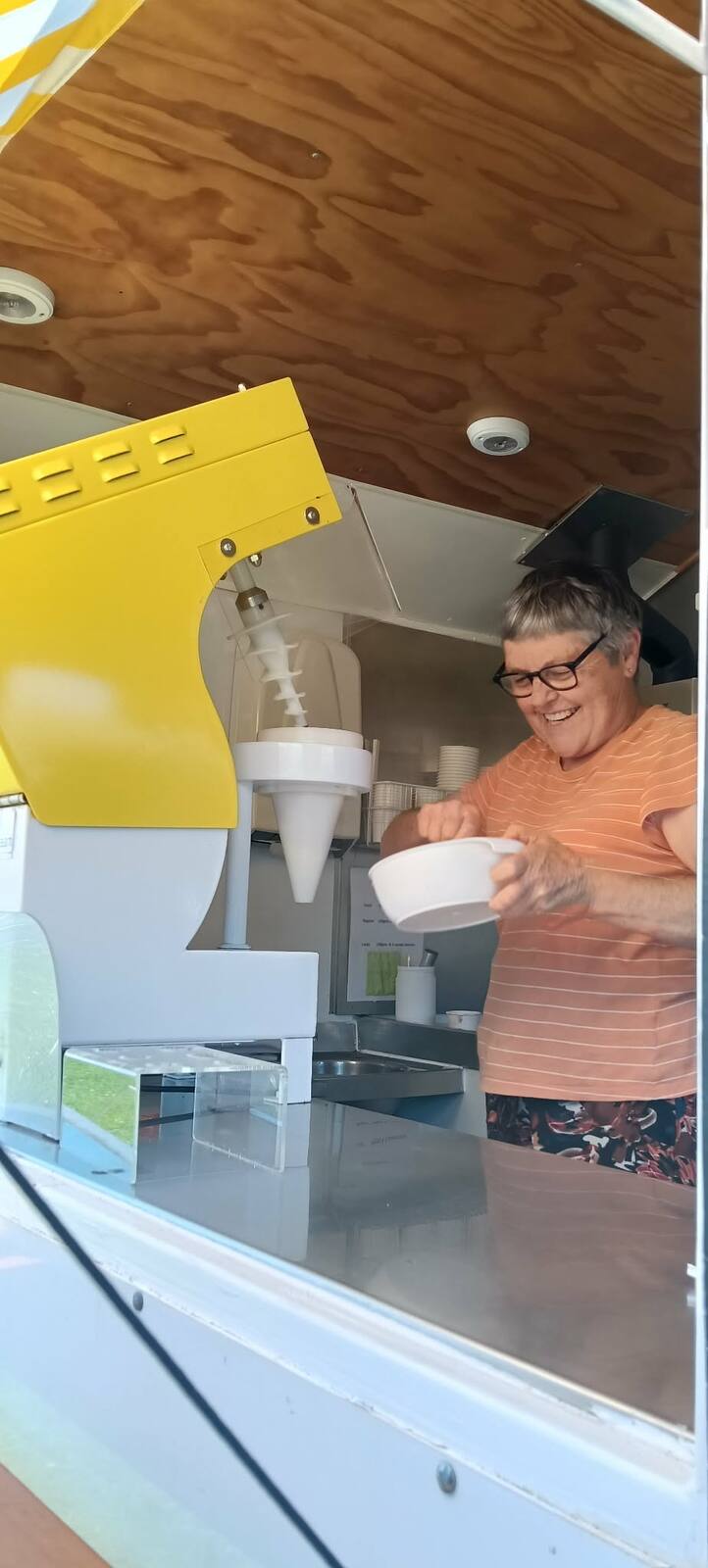
Today, Carol is Deputy Chair of Dementia New Zealand and a Board member of Dementia North, but her commitment to volunteering stretches across much of her adult life. Long before governance papers and board meetings, she was a nurse working in aged care, seeing people arrive at hospital when families had already reached breaking point.
“I think as a nurse you see people at the hospital end of things… quite often in crisis,” she says. “I had an interest in saying, well, how do we take it back up the cliff a little bit in terms of providing service for people?”
That question changed the direction of her life.
More than 30 years ago, she became involved with Alzheimer’s Rotorua (now Dementia North – Lakes), wanting to help people stay at home for longer with the right support around them. She has remained part of that journey ever since, supporting the evolution of dementia services and the transition to a stronger, nationally connected organisation through Dementia New Zealand.
Ask Carol what keeps her volunteering after three decades, and she doesn’t list achievements or milestones; she simply talks about people.
“There’s a really nice vibe in the not-for-profit sector when dealing with people. There’s not a lot of ego. People are there for the right reasons.”
It’s a simple observation, but it says a great deal about the way she sees the world. She grew up in a family where helping others was just expected.
“It was almost a values-driven thing,” she says. Looking after neighbours, supporting children and their friends, contributing where you could.
Carol also reflects on growing up in a part of the country with a strong Te Ao Māori presence.
“There’s something really nice about… looking after everybody,” she says.
Real ice cream
Those beliefs never left her. A few years ago, while studying not-for-profit management, Carol became fascinated by social enterprise. She wanted to find a practical way to generate funds for community organisations, but in her words, “didn’t want to open another op shop”.
Instead, she landed on an idea that makes perfect sense once you know her. Real fruit ice cream.
Her husband, George, who she describes as a “keen DIY enthusiast” and always looking for a project, built the trailer. Volunteers now help serve customers alongside some paid work for students – helping them both gain experience and save for university.
By the end of summer, the profits are shared with community organisations. Dementia support is always one of the beneficiaries, but so too are other local causes, from kindergartens to family harm services.
The ice cream is only part of the story. While people wait, Carol chats, opening the door to conversations about all kinds of topics, including local dementia services (she also has a sign on the van). People tell her about a whānau member, a neighbour or a friend, normalising important conversations that impact so many lives.
Measuring success
For someone who has spent decades in governance, it is perhaps fitting that Carol measures success differently from most people.
She talks about research from Canada that links volunteering with wellbeing. She believes we’re “hardwired for it”.
She once heard someone say that through volunteering, they had become a better person.
“I absolutely believe that,” she says.
What’s next?
This year, Carol turns 70. She laughs that she’s “winding down” and would be happy to hand over the mantle – one day.
The Stone Soup van will keep travelling while she and George can. Children will still climb up to order ice cream and important conversations will still happen. Communities will still benefit.
During Te Wiki Tūao-ā-Motu | National Volunteer Week, it’s easy to imagine volunteering as something extraordinary, reserved for people with endless spare time or exceptional talents.
Carol offers a different perspective.
“Community is only as good as when people all contribute.”
Some people contribute through decades of governance. Some give an hour at a local school, a sports club or a community group. Some simply stop to have a conversation that makes another person feel seen.
Like Stone Soup, stronger communities are rarely built by one person.
They’re built by all of us, each bringing what we can.