Learning from the world, for Aotearoa
Published 17 June 2026
The most valuable thing Dementia Canterbury CE, Darral Campbell, brought home from the recent International Dementia Conference in Sydney didn’t fit in her suitcase.
It wasn’t a research paper, a conference handbook or a new piece of technology. It was confirmation that some of the best dementia | mate wareware thinking in the world is moving in the same direction.
One speaker living with dementia spoke about the advice they had received after being diagnosed.
“You’ve got to fight it,” people told him.
His response: “I’m not fighting it. I’m not wasting my energy fighting something that I know I don’t actually have control over. I’m just getting on with my life and doing the things I want to do.”
To Darral, it reflected a philosophy that has long shaped Dementia Canterbury’s work: supporting people living with dementia is about seeking to understand what matters to them as individuals and then helping them continue to live meaningful lives.
She wasn’t the only one listening.
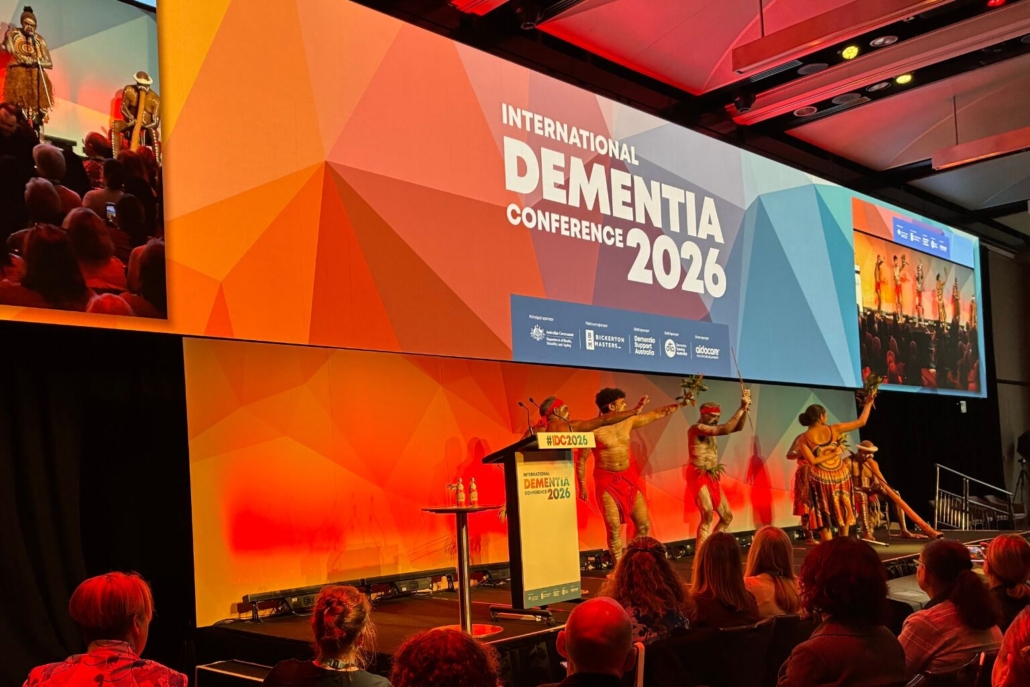
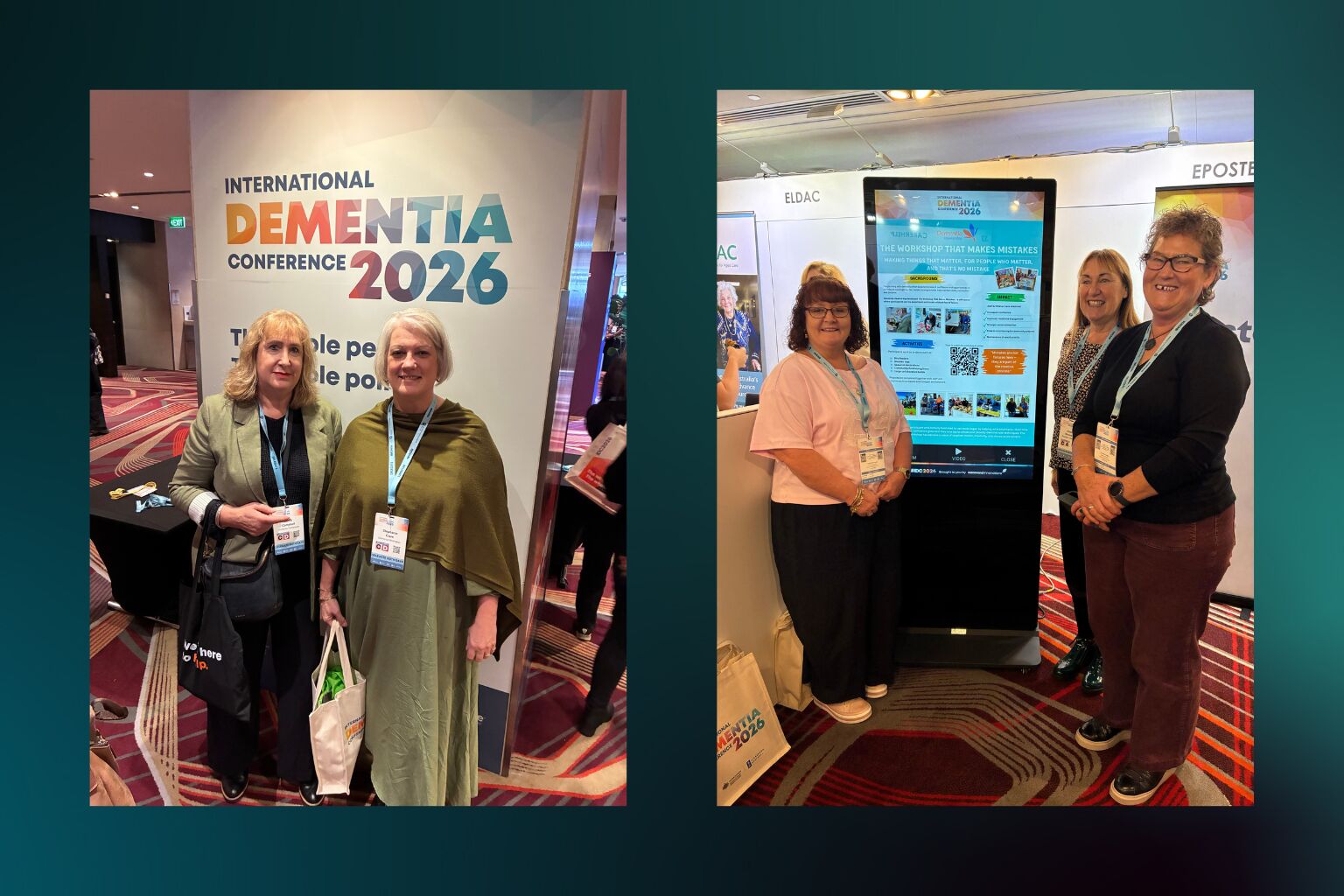
Joining Darral in Sydney were leaders from Dementia Hawke’s Bay and Dementia Wellington, alongside more than 1,000 researchers, clinicians, educators, service providers and people with lived experience from around the world, all exploring the latest thinking in dementia support, brain health and person-directed care.
Sharing as well as learning
The value of attending an international conference isn’t simply hearing new ideas. It’s also having the opportunity to test your own.
Dementia Hawke’s Bay contributed to the programme through an e-poster showcasing The Workshop That Makes Mistakes, an innovative initiative built on the idea that people living with dementia continue to learn, contribute and create when given the opportunity. Participants work together on practical projects in an environment where mistakes are embraced as part of the creative process rather than something to fear, with staff and whānau observing stronger social connections, increased confidence and pride in giving back to their community.
Tracey Lanigan, CE of Dementia Hawke’s Bay, sees the exchange of ideas as a two-way conversation.
“In Aotearoa, we simply don’t have access to this number of international researchers, clinicians and innovators all in one place,” she says. “But we also have innovative programmes and experiences to contribute. Events like this allow us to learn from others, share what we’re doing, and bring those conversations back into our own communities.”
Person-directed support
Throughout the conference, one idea recurred: the future of dementia support is becoming more person-directed.
Rather than asking, ‘What can’t this person do?’, the conversation is increasingly becoming, ‘What gives this person’s life meaning, and how do we support them to keep doing that?’
Stephanie Clare, CE of Dementia Wellington, found the same philosophy reflected in the words of dementia advocate Jonathan Brown.
Rather than describing his diagnosis as devastating, he spoke about it as a relief. Having a diagnosis gave him clarity and a sense of control. Instead of trying to fight something he couldn’t change, he chose to tackle challenges one at a time and focus on the life he wanted to continue living.
“For me, it reinforced the importance of person-centred decision making,” says Stephanie. “His diagnosis didn’t take hope away. It gave him a way to understand what was happening and focus on the things that still mattered to him.”
Darral agrees and believes that principle should shape the way services are designed.
“The essence is that people derive meaning from what’s important to them,” she says. “That has to shape the way we design and deliver our services. That’s an overwhelming message.”
Brain health in the spotlight
The CE group were pleased to see that brain health was firmly on the agenda. The conversation wasn’t simply about caring well for people living with dementia; it was also about creating a future where fewer people develop it.
Keynote speaker Professor Craig Ritchie’s work focuses on reducing the risk of dementia through earlier intervention and community understanding. Rather than accepting future dementia numbers as inevitable, his research challenges health systems to think differently about prevention and lifelong brain health.
The discussion left Darral asking an important question.
“What are we doing about the fact that all this research is out there now around reducing people’s risk?” she asks. “Health systems need to be acting now – while supporting people already living with dementia continues to be essential, helping future generations understand brain health is becoming just as important.”