You’re never too young to help
Published 15 June 2026
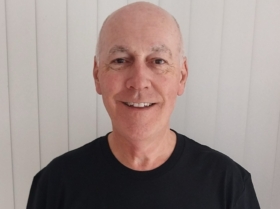
When people think about volunteers, they often picture someone who’s retired or has years of life experience behind them. Sixteen-year-old Jason breaks that stereotype.
The Year 12 Rototuna Senior High School student has just begun volunteering with Dementia North – Waikato as part of the school’s community-based Puna Wānanga | Impact Projects kaupapa.
The programme gives students the opportunity to spend time giving back or exploring pathways that might help shape their future. For Jason, now into his second year of volunteering, he chose dementia | mate wareware in 2026 not because he had a whānau connection, but simply because he wanted to contribute to his community and learn something new.
“Volunteering really helps with job experience too… because you need prior experience for jobs these days,” says Jason. “But more than anything, it allows you to go out into your community and experience something different.”
Of all the organisations Jason could have joined, Dementia North stood out.
His interest in dementia had been sparked in an unexpected way through music. Listening to an instrumental album by The Caretaker that explores the progression of dementia made him curious to understand more about the condition and the people living with it.
For now, his contribution is practical. He’s assisted both with catering for an event and, separately, with administration support for the Waikato office, helping to prepare resources for the clinical team.
While the jobs haven’t been glamorous, they’re an important ‘backroom’ function that supports our clinical teams in concentrating on what they do best – helping our community. No matter the type of product or service you deliver, every organisation relies on people who are willing to roll up their sleeves and help wherever they’re needed, and Dementia North is no different.
Jason admits that the hardest part for many people is simply getting started.
“The hardest part of volunteering isn’t actually the volunteering,” he says. “I found the worst part was all the emailing around and paperwork, but when you do it, you meet the greatest people. They’re so nice… so I’d say to other people, you shouldn’t be scared or nervous.
“Rip the band-aid off and just do it, because when you do it and get into this motion, it becomes normalised – so, no excuses!”
This Te Wiki Tūao-ā-Motu | National Volunteer Week, we’re celebrating the people who give their time to support others through service to our dementia community. Jason’s story shows that volunteering doesn’t have to wait until later in life.
You don’t need decades of experience. You don’t have to know exactly what you’re doing. Sometimes you simply need to be willing to help.
And, as Jason has already discovered, you might just “meet the greatest people there.”
Side note — the music that sparked Jason’s interest
The Caretaker’s album: ‘Everywhere at the End of Time’
Everywhere at the End of Time is a six-part experimental music project by British artist The Caretaker (Leyland Kirby). Lasting more than six hours, it uses altered ballroom music and increasing distortion to artistically represent the progression of dementia, moving from familiar melodies to confusion, fragmentation and silence. While it is not a medical or scientific explanation of dementia, the work has attracted a global following and has introduced many people, including Jason, to conversations about memory loss and the experience of living with dementia.
Source: thequietus.com · Listen on YouTube